Portrait of an owner-operator: Ray Salazar's Laredo-to-Chicago run
A reefer hauler out of San Antonio breaks down the economics of a 2026 owner-op operation — the truck, the lane, the kid in high school, and the math behind staying small.
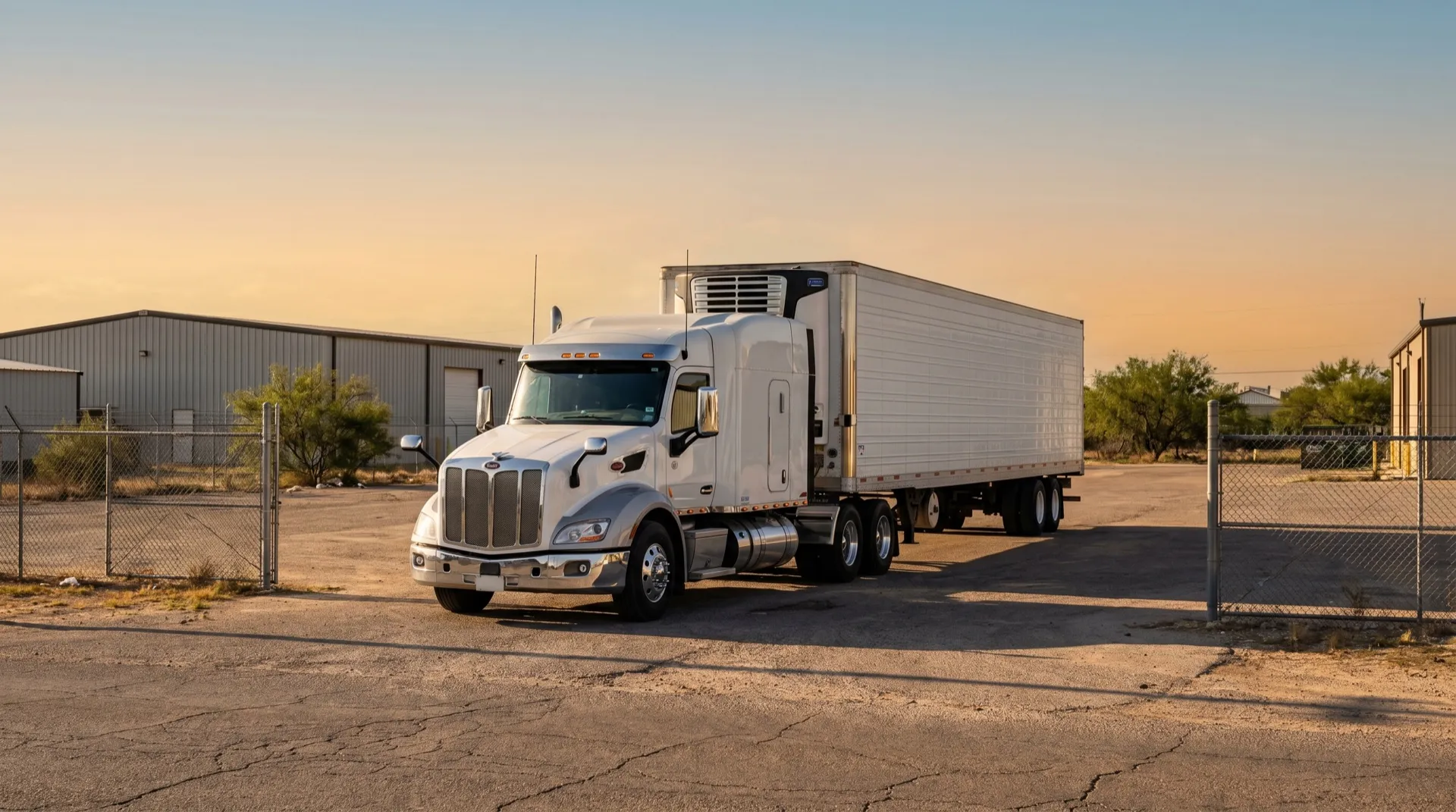
Ray Salazar runs one truck. A 2021 Peterbilt 579 with a Paccar MX-13, paired to a 2023 Utility 3000R reefer with a Carrier Vector unit. He bought the tractor used in 2024 at 412,000 miles for $78,000 and has put another 180,000 on it since. He works out of a yard in San Antonio that he shares with two other independent operators, and his bread-and-butter run is Laredo to Chicago — Mexican produce north, mixed dry and reefer freight south — booked mostly through three brokers he’s worked with since 2022.
He is forty-six. He has been driving since he was twenty-three. He went owner-operator in 2018 after eleven years at a mid-size Texas carrier where he ran the same lane as a company driver. The decision to buy his own truck was not, he says, particularly romantic. It was a spreadsheet. His revenue ceiling as a company driver had plateaued. The carrier was good but small, and there was nowhere up. He ran the math, talked to his wife — who runs a dental office in San Antonio — and bought a truck.
The lane
The Laredo–Chicago corridor is one of the densest produce lanes in North America. Roughly 40% of all U.S. produce imports cross the border at Laredo, and a significant share of that volume moves north into the Midwest distribution centers around Chicago. Reefer rates on the lane are seasonal — strongest from late winter through early summer when Mexican avocados, berries, and stone fruit are moving heavy — and Salazar has built his year around that seasonality.
In a strong week he will run two and a half round trips, roughly 4,800 miles, and gross around $11,500 before fuel. In a soft week — late August, mid-December — he might do 3,200 miles and gross $6,800. His all-in cost per mile, which he tracks in a spreadsheet his wife designed for him, runs $1.82 in 2026 dollars. That includes everything: fuel, the truck note, insurance, maintenance reserve, plate and permit, parking, his health insurance, and the share of yard rent.
“The brokers know me,” he says. “I deliver. I don’t take loads I can’t move on time. I don’t call dispatch every time the GPS misroutes me. That’s the whole business, really. You become someone three or four brokers want to keep happy.”
The truck
The 579 was not his first choice. He had wanted a newer Kenworth W990 — he likes the visibility, he likes the way the older Kenworths held value — but the math on a $185,000 used W990 against a $78,000 used 579 was decisive. The 579 is more truck than he needs for the lane, has the integrated MX-13 powertrain he was familiar with from his carrier days, and the Peterbilt dealer network in south Texas is dense enough that he can usually get a service appointment inside a week.
He has put roughly $14,000 into maintenance since purchase. A new turbo at 540,000. A full DPF clean and a set of injectors at 560,000. A reseal on the rear main last fall. He does his own preventive maintenance — oil, fuel filters, air dryer cartridges — at the yard, with a friend who is a fleet tech for a local food distributor and trades labor for the use of Salazar’s tools.
The reefer is the part of the operation that worries him most. The Carrier unit is solid, but reefer breakdowns are the nightmare event of the produce lane — a unit failure on a load of Mexican berries headed for a Chicago DC is a five-figure claim before anyone’s even off the phone. He carries a $5,000 deductible cargo policy through Great West, and he replaces the reefer’s belts and sensors on a schedule whether they need it or not.
The family math
Salazar’s daughter is sixteen, a junior at a Catholic high school in San Antonio, and looking at colleges. His son is twelve. His wife’s job is the household’s stable income; the truck is the variable one. Most weeks Salazar is home Sunday afternoon through Monday morning, and tries to be home one mid-week night when his daughter has a swim meet.
He has thought about adding a second truck — every owner-operator has — and the math doesn’t quite work for him at his current scale. A second truck means another driver, which means recruiting and retention work he doesn’t want to do, payroll taxes he doesn’t want to manage, and the kind of operational overhead that turns a one-truck owner-operator into a small carrier whether he wants to or not. He’s seen friends try it. About half of them are still doing it five years later.
“Right now I’m running one truck very well,” he says. “The day I’m running two trucks badly is the day I’m not doing this anymore.”
What he reads
He listens to Sirius mostly — Channel 146 for news, country on long stretches, a Spanish-language sports station on the way home — and a small set of trucking podcasts in the morning. He follows the FMCSA’s emergency declarations on his phone because south Texas hurricane season is real. He reads OOIDA’s Land Line magazine, mostly for the regulatory coverage. He stopped reading the produce market reports because they made him second-guess his lane choice and he’d already made it. He pays attention to diesel futures because they tell him what next quarter’s fuel bill is going to look like.
He is not on TikTok and is mildly bemused that other drivers are.
The exit plan
Salazar’s plan is to run this truck for another four to five years, then trade it for something newer with a longer warranty and run that one to the end of his driving career, which he is roughly mapping to age sixty. By then the daughter will be through college, the son will be through college if everyone is lucky, and the house will be paid off. He has a small Roth IRA he funds in good months and an HSA he uses as a backup retirement vehicle.
He does not plan to scale up. He does not plan to switch lanes. He plans, in his words, to keep being the guy three brokers want to keep happy, until he doesn’t anymore.
“It’s a small business,” he says. “People forget that. One truck, one driver, one route. That’s a small business. Most small businesses don’t last twenty years. I’m trying to make this one of the ones that does.”